
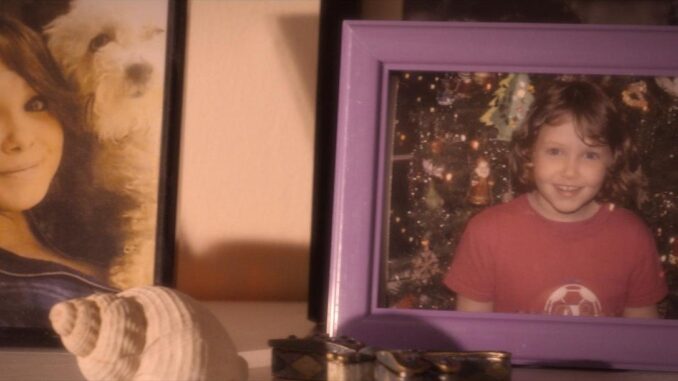
In 2012, 16-year-old Skylar Neese sneaked out of her home in Star City, West Virginia, got into a car with two of her closest friends, and was never seen alive again. Her killers were those same two friends. The case got national attention at the time, and it is back in the spotlight with Friends Like These: The Murder of Skylar Neese, a new three-part docuseries premiering on Max that reconstructs what happened—and tries to make sense of why.
I had a chance to talk with director Claire Titley, retired FBI special agent Rob Ambrosini, and Ariah Johnson, one of Skylar’s friends, ahead of the premiere. The interview covered a lot of ground, but a few things stuck with me.
Skylar’s Digital Archive Made the Series Possible
Most true crime content focuses heavily on the perpetrators—the investigation, the psychological profile, the chase. Victims tend to get reduced to names and dates. Titley said that was something she specifically wanted to avoid.
“Too often you have films where the victim can very easily become kind of like a plot device,” she explained. “It was really important for us to give her her voice back and allow her some agency—to have control of her own story again.”
What made that possible was Skylar’s digital footprint. Tweets, text messages, posts—the kind of thing teenagers in 2012 generated constantly and often without much thought. Skylar’s parents gave the filmmakers access to that archive, and the series uses her actual words throughout. It is a different kind of documentary because of it. You get a real sense of who she was—loyal, funny, a little rebellious in the way most 16-year-olds are. She would have turned 30 a few weeks ago.
Ariah Johnson, who was one of Skylar’s friends, put it straightforwardly: “I want people to see that Skylar was a person. She was the kind of person who would stand up for you any chance she got. I want them to see how great of a person she was.”
Social Media Wasn’t the Cause—But It Wasn’t Neutral Either
By 2012, social media was already embedded in teenage life—but adults, platforms, and institutions had essentially no framework for understanding what it was doing developmentally.
Johnson described how teenagers used Twitter the way previous generations used paper diaries. “We used social media almost as our own diary,” she said. “If you’re having a bad day, you’re going to go online and say ‘I hate everybody, my life is the worst.’ That was just normal. Even now, I wouldn’t look back and say that should have been a red flag.”
But the difference between a paper diary and a Twitter feed is enormous. A diary doesn’t talk back. Social media does—and the responses, whether validating or hostile, amplify whatever the person was already feeling. Johnson described it clearly: “If somebody goes on there and says, ‘You’re right, today is awful’—then I’m like, yeah, today is awful. And if somebody says it could be worse, that makes me feel even worse.”
Titley connected this to the deterioration of the friendship between Skylar and her two friends. “It was definitely a factor in the escalation,” she said. Social media didn’t cause the murder—she was explicit about that—but it intensified conflicts that might have faded on their own, and it made those conflicts visible in a way that private communication wouldn’t have.
Titley noted that this was a generation without guardrails. “They were the experiments,” she said. “Teenagers now have social media training. Their parents know what they’re looking for. Nobody was giving them any warnings.”
That’s still mostly true. We’ve shifted from worrying about MySpace to worrying about TikTok, but the dynamic hasn’t fundamentally changed. By the time adults identify a platform as something to watch, teenagers have already moved on to the next one. The conflict between Skylar and her friends played out in a digital space that adults had essentially no visibility into. That’s still the case for a lot of teenagers today.
And honestly—what Johnson described isn’t just a teenage problem. The feedback loop she was talking about, where social media validates and amplifies whatever emotion you’re already feeling, is exactly how these platforms work for everyone. Teenagers just experience it without any of the context or emotional regulation that comes with age. And in 2012, there wasn’t even that. They were figuring it out in real time.
The Polygraph as a Conversation Tool
Ambrosini’s take on polygraphs was one of the more interesting parts of the interview from a technology perspective. Polygraphs are genuinely controversial—results aren’t admissible in most courts, and it is possible to manipulate your stress responses. But Ambrosini described using the technology less as a truth-detection device and more as a way to open a door.
“It’s really used as an avenue to verify information,” he explained. “Ultimately, it was kind of like a launching pad for having a conversation. Let’s not talk about the test now. I can see there’s a problem here. Let’s talk about why.”
What the polygraph actually did in this case was reveal inconsistencies in the stories the suspects were telling—the time of the drop-off changes, the location changes—and those inconsistencies gave investigators a thread to pull. It wasn’t the machine detecting lies so much as the process exposing the difficulty of maintaining them.
Ambrosini also mentioned something called the Hawthorne effect—the well-documented tendency for people to change their behavior when they know they’re being monitored. The same thing happens in an interview room. People start out guarded, then gradually forget they’re being monitored and start talking more naturally. The rapport takes over. That’s usually when the useful information comes out.
What the Series Is Actually About
Friends Like These isn’t a whodunit. Everyone knows what happened to Skylar Neese. What the series is trying to do is answer the harder question: why. And Titley was upfront that there’s no clean answer.
“There are no easy answers in terms of motive,” she said. “That’s one of the most interesting and frustrating things about this case—from law enforcement, from her friends, from her family.”
What she hopes people take away is something more specific: a real memory of what it felt like to be 16. The intensity of friendships at that age, the outsized emotions, the bad decisions that seem obvious in hindsight. Add social media to that—a then-new technology that nobody fully understood, running on algorithms designed to maximize engagement—and you have conditions that are genuinely dangerous, even if nobody recognized them as such at the time.
They still exist. That’s the uncomfortable part. Skylar Neese’s story happened in 2012, but the technological and social conditions that shaped it haven’t gone away. They’ve gotten more sophisticated. Teenagers are still navigating a digital world that adults are still catching up to, and the platforms are still optimized for engagement over wellbeing.
The series is worth watching. Not because it answers every question, but because it doesn’t pretend to.


Leave a Reply